

Dry Cough During Pollution Season: Causes, Care and Warning Signs
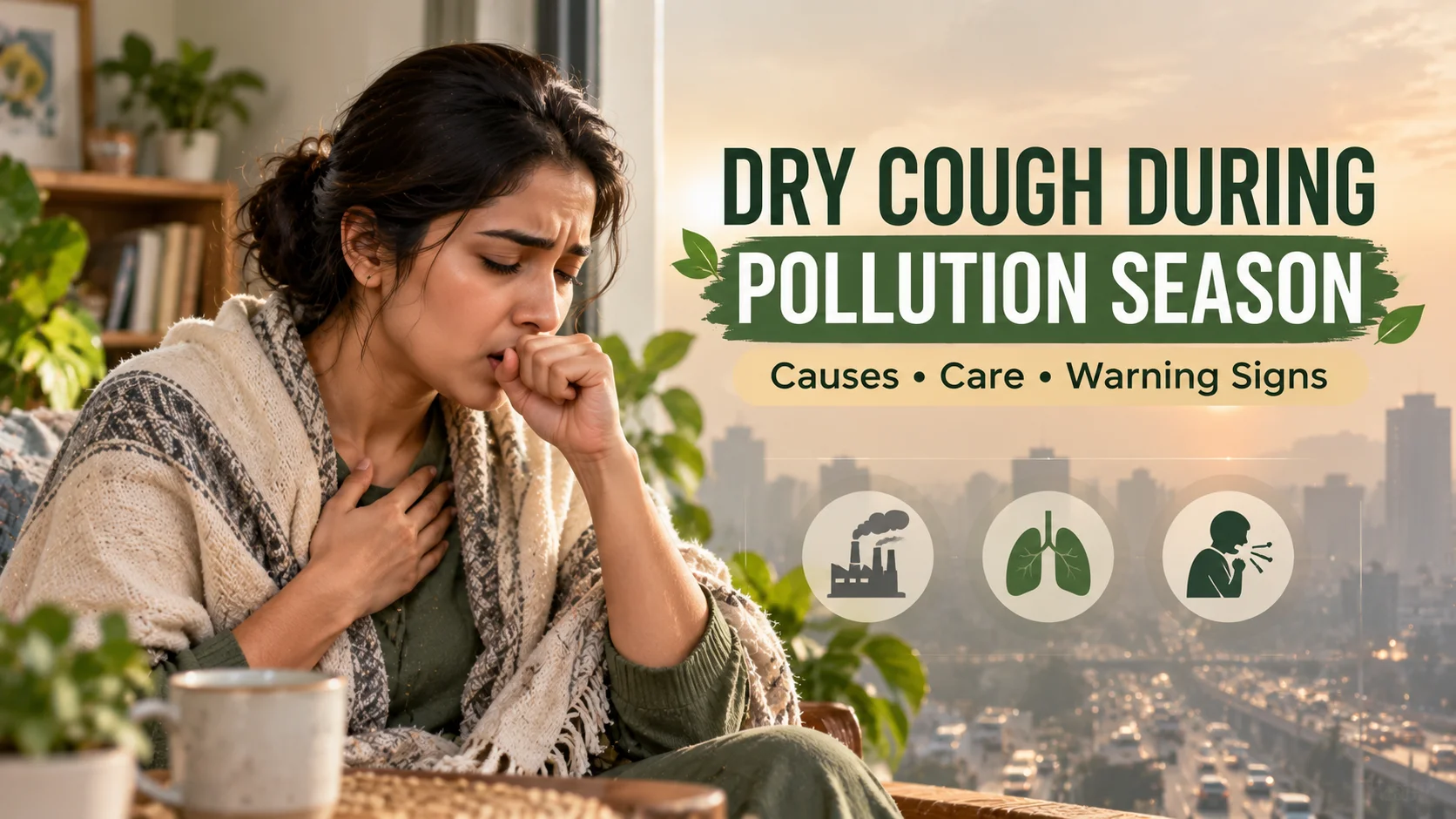
A scratchy throat on your commute. A cough that interrupts conversations. Irritation that seems worse after spending time outdoors. During pollution season, these experiences can leave you wondering whether the air, an infection or something else is responsible.
Air pollution can irritate the airways and contribute to coughing, but a cough alone cannot identify its cause. Reducing exposure is important, while persistent or worsening symptoms need appropriate assessment.
Here is a practical guide to caring for your throat, making informed choices about cough products and recognising when home care is not enough.
Can Air Pollution Cause a Dry Cough?
Yes. Polluted air can irritate the nose, throat and respiratory tract. India’s National Centre for Disease Control lists coughing, throat irritation, wheezing and breathing difficulty among possible effects of short-term exposure to high pollution levels.
A dry cough produces little or no mucus. However, whether your cough is dry or brings up phlegm does not reliably tell you what caused it. Pollution may also aggravate an existing respiratory condition.
Read the Government of India advisory on air pollution and health for more information.
Is It Pollution, a Cold or an Allergy?
A cough can have several explanations, including a viral infection, allergies, acid reflux or mucus running down the back of the throat. More than one trigger may be present.
Notice when symptoms started, where they worsen and whether they affect sleep or everyday activities. These details can help a clinician assess the problem. Avoid deciding that a cough is “just pollution” because it began on a hazy day.
Five Practical Steps During Pollution Season
1. Check Air Quality Before Planning Outdoor Activity
Use an official local air-quality service and follow health advisories. When pollution is high, adjust the location, timing or intensity of outdoor exercise. Avoid assuming that an early-morning walk always means cleaner air.
If possible, choose routes away from heavy traffic and other obvious pollution sources.
2. Understand What a Mask Can Do
A properly fitted, certified particulate respirator, such as an N95, can reduce exposure to airborne particles. Fit matters: gaps around the face reduce protection. Particulate respirators do not filter all pollutant gases or make polluted air harmless.
The WHO guidance on personal protection from air pollution explains the role and limitations of these measures.
3. Reduce Pollution Sources Indoors
Avoid tobacco smoke and minimise smoke-producing activities indoors. An air cleaner works best alongside control of pollution sources, rather than as a substitute for it.
If you use a purifier, choose one suited to the room size. A HEPA filter can help capture airborne particles, but it does not remove every pollutant. Avoid devices that intentionally generate ozone, which can irritate the lungs.
See the EPA guide to air cleaners in the home for selection and use advice.
4. Keep Throat Care Simple
Rest and drink fluids. A comfortably warm drink with honey may soothe some coughs, although evidence of benefit is limited. Never give honey to a baby under one year, and avoid hot drinks that could burn.
These measures may improve comfort; they do not remove inhaled pollutants or treat every cause of coughing.
5. Review Any Product Before Taking It
Check the ingredients, age restrictions, directions and precautions. Ask a pharmacist or clinician about suitability if you are pregnant, breastfeeding, taking medicines or choosing a product for a child.
Using several cough-and-cold products together can make it harder to track ingredients. Take the labels with you when asking for advice.
Where Does Kofdis Cough Syrup Fit?
KPS Ayurveda Care describes Kofdis Cough Syrup as an Ayurvedic proprietary medicine formulated to support cough, throat irritation and respiratory discomfort.
If you are considering Kofdis, review its current product label and follow professional advice about suitability and use. Symptom support does not establish that a product prevents pollution-related lung damage or treats an underlying infection or asthma.
Continue prescribed treatment unless your treating clinician advises otherwise. A cough syrup should not replace an inhaler or delay assessment of breathing difficulty.
When Should You Seek Medical Care?
Seek urgent care if your cough is rapidly worsening, you feel very unwell, have chest pain, cough up blood or find breathing difficult. Severe breathing difficulty is an emergency.
Arrange a medical assessment if a cough lasts more than three weeks, or sooner if you have unexplained weight loss, a weakened immune system or other concerning symptoms.
The NHS cough guidance explains common causes, self-care and warning signs.
Frequently Asked Questions
Can Pollution Cause Coughing Without Fever?
It can, but absence of fever does not confirm pollution as the cause. Consider the full symptom pattern and seek assessment when symptoms persist or worsen.
Can Warm Water Clean Pollution Out of My Lungs?
No. Drinking water can support hydration and throat comfort, but it does not wash pollutants out of the lungs. Reducing exposure remains important.
Should I Take Antibiotics for a Seasonal Cough?
Not without medical advice. Antibiotics are not routinely needed for coughs. A clinician can determine whether there is a bacterial infection or another reason to prescribe them.
Is an Ayurvedic Cough Syrup Suitable for Everyone?
No product should be assumed suitable for everyone. Ingredients, age, pregnancy, existing conditions and other medicines all affect the decision. Check the specific label and ask a qualified professional.
Does Cough Relief Mean My Lungs Are Protected from Pollution?
No. Feeling more comfortable does not measure your exposure or establish protection from pollution-related harm. Continue following air-quality advice even if the cough improves.
Build a Practical Throat-Care Routine
Start with the steps you can control: check local air quality, reduce smoke exposure, adjust outdoor activity when needed and pay attention to changes in your symptoms.
To learn about our cough-care offering, explore Kofdis Cough Syrup from KPS Ayurveda Care and review the current product information.
This article provides general health information and does not replace personalised medical advice, diagnosis or treatment.
Related Posts


Recommended For You
