

Why Packaged Foods Can Make You Feel Low on Energy: Understanding Nutrition, Energy & Healthy Food Choices
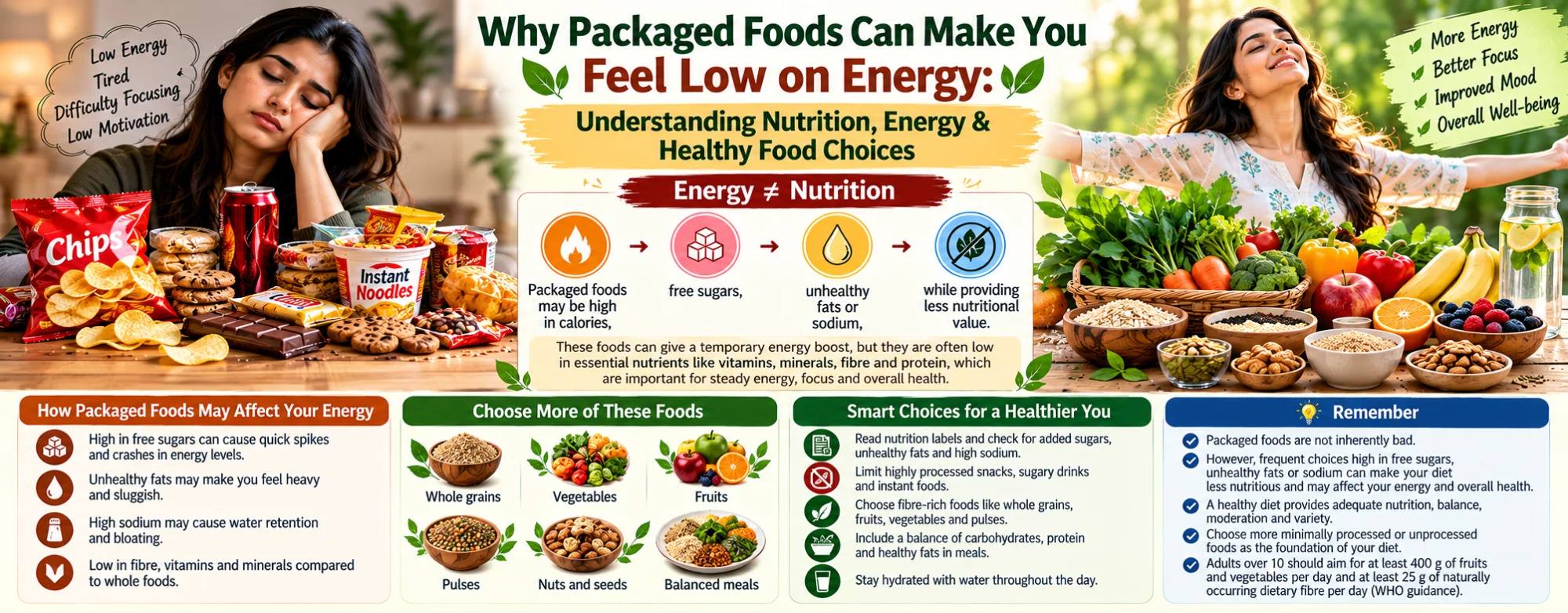
Why Packaged Foods Can Make You Feel Low on Energy
In today's busy lifestyle, packaged and processed foods have become a convenient choice for many people. Ready-to-eat meals, packaged snacks, biscuits, instant noodles, chips, sugary cereals, bakery products and sweetened beverages can save time and are easily available.
However, when these foods become a regular part of our diet, we may not always get enough of the nutrients our body needs. Some people also notice that after eating highly processed foods, they feel heavy, sluggish or less energetic rather than refreshed.
So, why can this happen? The answer is closely connected with the overall nutritional quality of our diet.
What Are Packaged and Highly Processed Foods?
Packaged food simply means food that is sold in a package. Not every packaged food is unhealthy. Foods such as plain oats, unsalted nuts, seeds, frozen vegetables and some whole-grain products can be nutritious.
The bigger concern is highly processed foods that are often high in added sugar, sodium, refined carbohydrates or certain types of fats while providing relatively little fiber and fewer naturally occurring nutrients.
Examples may include:
- Chips and packaged salty snacks
- Sugary biscuits and cookies
- Sweetened breakfast cereals
- Instant noodles and ready-to-eat meals
- Sugary drinks and packaged beverages
- Highly processed bakery products
- Packaged desserts and confectionery
Why Do We Sometimes Feel Low After Eating Processed Food?
Feeling tired after eating can have many causes, and it is not correct to blame every episode of low energy on packaged food. However, frequently choosing highly processed foods can make it harder to maintain a balanced diet.
1. They May Provide Fewer Nutrient-Dense Ingredients
Our body needs protein, fiber, vitamins, minerals, healthy fats and carbohydrates for normal energy metabolism and overall health. If highly processed foods replace nutritious whole foods too often, the overall diet may become less nutrient-dense.
2. Some Foods Are High in Refined Carbohydrates or Added Sugar
Many packaged snacks and sweet foods contain refined carbohydrates or added sugars. These foods can provide energy quickly, but they may not keep you satisfied for long. Some people may experience fluctuations in energy or hunger afterward.
3. Low Fiber Can Affect Satiety
Whole foods such as fruits, vegetables, pulses, beans and whole grains generally provide dietary fiber. Many highly processed snack foods contain comparatively little fiber. A diet lacking sufficient fiber may be less satisfying and may not support optimal digestive health.
4. Large Amounts of Salt or Fat Can Make Meals Feel Heavy
Some packaged foods contain considerable amounts of sodium or fat. Eating them frequently or in large portions may make you feel heavy or uncomfortable, especially when the overall diet is not balanced.
Whole Foods Can Help Support Better Everyday Energy
Instead of focusing only on avoiding packaged food, it is more helpful to build meals around a variety of nutritious foods.
A balanced meal can include:
- Whole grains: oats, whole wheat, brown rice and other minimally processed grains
- Protein-rich foods: dal, beans, chickpeas, paneer, curd, milk, nuts and seeds
- Vegetables: seasonal and colorful vegetables
- Fruits: fresh seasonal fruits
- Healthy fats: nuts, seeds and appropriate amounts of healthy cooking oils
- Water: adequate hydration throughout the day
Simple Swaps for a More Nutritious Diet
You do not have to completely eliminate every packaged food from your life. Small, practical changes can make your daily diet more nutritious.
| Instead of Frequently Choosing | Try More Often |
|---|---|
| Chips | Roasted chana, nuts or seeds |
| Sugary biscuits | Fresh fruit with nuts or homemade snacks |
| Sugary drinks | Water, unsweetened beverages or plain buttermilk |
| Instant noodles as a regular meal | Vegetable-rich homemade meals |
| Packaged desserts | Fresh fruit or a small homemade dessert occasionally |
Read the Food Label Before You Buy
Packaged food does not automatically mean unhealthy. Learning to read food labels can help you make better choices.
Look at the ingredient list and nutrition information. Pay attention to added sugars, sodium, saturated fat, fiber and protein. Also consider the serving size because the numbers on a label may apply to a smaller serving than you actually eat.
A simple rule is: the more often your diet is based on minimally processed, nutrient-rich foods, the easier it can be to maintain a balanced nutritional pattern.
Healthy Food Is About More Than Just Calories
Food provides more than calories. Our body also needs nutrients that support normal body functions, including vitamins, minerals, protein, essential fatty acids and fiber.
That is why two foods containing a similar amount of calories may not have the same nutritional value. A meal containing vegetables, whole grains and a protein source can provide a broader range of nutrients than a snack that mainly provides refined carbohydrates, added sugar or fat.
Can Packaged Food Be Part of a Healthy Diet?
Yes. A healthy diet does not require perfection.
Some packaged foods can be convenient and nutritious. For example, plain oats, unsalted nuts, roasted legumes, frozen vegetables and minimally processed whole-grain products can fit into a balanced diet.
The important point is to avoid relying heavily on highly processed snack foods and instead make nutritious whole or minimally processed foods the foundation of your everyday meals.
Simple Habits to Feel More Energetic
- Start your day with a nutritious breakfast if it suits your routine.
- Include a protein source in your meals.
- Eat plenty of vegetables and seasonal fruits.
- Choose whole grains and fiber-rich foods regularly.
- Drink enough water throughout the day.
- Limit frequent consumption of highly processed snacks and sugary drinks.
- Maintain regular physical activity.
- Get adequate and consistent sleep.
Final Thoughts
Packaged food can be convenient, but convenience should not replace nutritional quality. When highly processed foods frequently replace fresh, whole and minimally processed foods, your overall diet may become less balanced.
If you often feel tired or low after eating, look at your complete eating pattern rather than blaming one particular food. A balanced diet containing vegetables, fruits, whole grains, pulses, protein-rich foods, healthy fats and adequate water can help support your body's nutritional needs and everyday well-being.
Remember: food is not only about filling the stomach—it is also about providing the nutrients your body needs to function well.
Frequently Asked Questions
1. Does packaged food always cause low energy?
No. Packaged food is a broad category, and some packaged foods are nutritious. Low energy can have many causes, including inadequate sleep, dehydration, an unbalanced diet, stress and certain health conditions.
2. Why do I feel tired after eating junk food?
Some highly processed foods are rich in refined carbohydrates, added sugars or fats and may be low in fiber and other nutrients. Depending on the food, portion size and individual response, this may contribute to feeling sluggish or unsatisfied.
3. Should I completely stop eating packaged food?
Not necessarily. Instead, make nutrient-rich whole and minimally processed foods the foundation of your diet and keep highly processed foods as occasional choices.
4. What foods can support better energy?
Balanced meals containing whole grains, pulses, beans, vegetables, fruits, dairy or other protein sources, nuts and seeds can provide a variety of nutrients needed for normal energy metabolism.
5. What if I regularly feel very low on energy?
Persistent or unexplained fatigue should not automatically be attributed to food. If low energy continues, is severe, or is accompanied by other symptoms, consult a qualified healthcare professional to identify the underlying cause.
Disclaimer
This article is for general educational and wellness information only. It is not intended to diagnose, treat or prevent any disease. Individual nutritional needs can vary. If you have persistent fatigue or a medical condition, consult a qualified healthcare professional or registered dietitian for personalized advice.
Related Posts


Recommended For You
